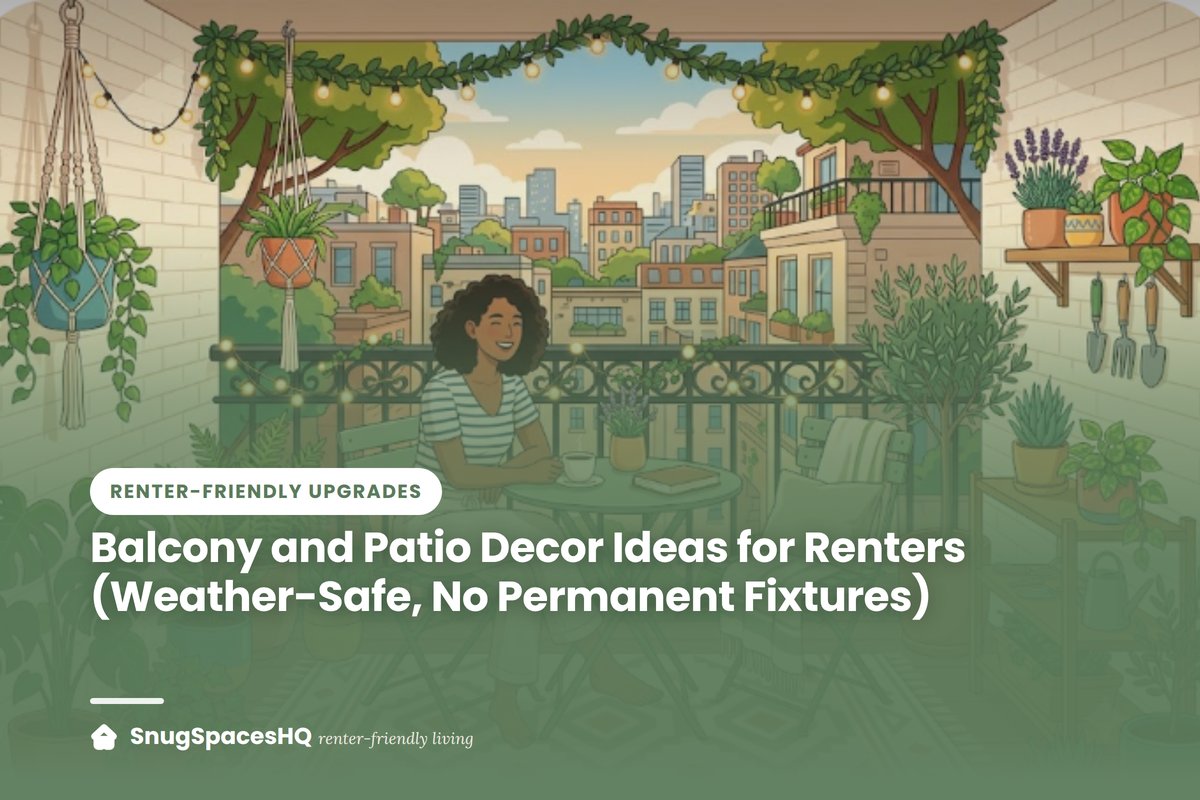
Balcony and Patio Decor Ideas for Renters (Weather-Safe, No Permanent Fixtures)
My first apartment balcony was six feet by four feet, faced a parking lot, and came with a strict “nothing attached to the railing” clause buried on page eleven of the lease. It took me a full summer of trial and error, one ruined security deposit inspection on a friend’s place (not mine, thankfully), and a lot of returned Amazon orders to figure out what actually works outdoors when you can’t drill, screw, or glue anything to the structure. Below is what I’ve learned, plus some specifics worth knowing before you buy anything.
Planters: Go Weighted and Freestanding, Not Railing-Mounted
Railing planter boxes look great in photos, but a lot of leases and HOA rules specifically prohibit them, and for a reason that has nothing to do with aesthetics. A planter hanging over the outside of a railing is one gust of wind away from becoming a projectile onto the patio below, which is exactly why property managers and condo boards treat them as a liability issue rather than a decorating preference. Check your lease before you buy a single one.
Freestanding pots sitting flat on the balcony floor sidestep that problem entirely. The tradeoff is weight: balconies have load limits, and a cluster of large ceramic pots filled with wet soil adds up fast. A rough rule of thumb used in a lot of balcony safety guides is not to exceed about 40 pounds per square foot of usable floor space when you total up furniture, planters, and people. You’re unlikely to hit that on a small apartment balcony with a few pots, but it’s worth knowing before you go full container garden with six large glazed ceramic planters.
A few practical fixes that don’t involve any hardware in the wall or railing:
- Choose fiberglass or resin pots over ceramic or concrete when you can — same look, a fraction of the weight, and they won’t crack in a hard freeze the way glazed ceramic sometimes does.
- Use plant pot stabilizer clips or interlocking risers to keep top-heavy pots (think tall grasses or small trees) from tipping in wind, instead of anchoring them to anything.
- Pick self-watering or double-walled containers with a built-in reservoir. Water constantly leaking through drainage holes onto a wood or composite deck is one of the most common damage complaints property managers report, and it’s an easy one to avoid.
- Group pots on a plant caddy with locking wheels near an exterior wall rather than the railing — this also makes it dramatically easier to move everything in before a storm.
Outdoor Rugs That Won’t Fade or Mildew in a Season
Not every rug marketed as “outdoor” is actually built for direct sun and rain. What you want is polypropylene, and specifically something woven with UV-stabilized fibers, not just a polypropylene rug that happens to be sold in the patio section. The difference matters: a cheap indoor-style rug left outside will bleach out and go brittle by midsummer, while a properly UV-treated one is designed to sit in direct light for years without the color washing out.
Polypropylene also dries fast and resists mold, which matters if your balcony doesn’t get much airflow or if you’re dealing with a covered patio that traps humidity. Look for a flat weave rather than a plush pile — plush outdoor rugs trap moisture at the base of the fibers and can start smelling musty by the second rainy season. A rug with a rubber or non-slip backing is worth the extra few dollars too, since a loose rug on a windy high-rise balcony will end up flapping against the railing or blowing into a neighbor’s space.
String Lights Without Screwing Anything Into the Building
Skip the eye hooks and skip drilling into the stucco or brick, even if it seems like a small hole. Two approaches actually hold up outdoors.
The first is a freestanding pole system — the kind that bolts into a weighted base you fill with sand or water, similar to a patio umbrella stand. These are designed for exactly this situation and can support a full string of café lights across a balcony without touching a single surface that belongs to the building.
The second is adhesive hooks that are actually rated for outdoor use, not the standard indoor Command strips repurposed outside. The outdoor-rated line is tested to handle temperature swings roughly from -20°F to 125°F along with wind and rain, and the weight ratings vary a lot by size: small wire hooks top out around half a pound, medium ones handle about 2 pounds, and the larger outdoor hooks are rated up to 5 pounds. A standard 48-foot strand of LED café lights weighs less than that per hook if you space your hooks every few feet, but do the math for your specific set before you commit, and always press the adhesive onto a clean, dry surface — painted brick and popcorn texture are notoriously bad surfaces for any adhesive hook to grip.
One thing I’d add from experience: buy a couple extra hooks. They’re cheap, and having a backup on hand beats climbing up to re-stick one at 9pm because the first attempt didn’t cure long enough before you hung the lights.
Furniture That Folds, Stacks, or Nests
Small balconies punish bulky furniture. A single non-folding bistro set can eat 70% of the usable floor space on a standard apartment balcony, which leaves you with nowhere to actually stand. Folding bistro sets solve this in a literal sense — most fold flat enough to lean against the wall or store in a closet during winter, which also means you’re not leaving furniture out to take a full season of freeze-thaw damage.
Stackable chairs are the other workhorse here. Two stackable resin or aluminum chairs take up the vertical footprint of about one chair when nested, and they’re light enough to move around depending on whether you want a table setup or just floor space for yoga or a grill-adjacent hangout (more on grills below). If you’re working with a patio rather than a tiny balcony, look at nesting side tables instead of one large coffee table — you get the surface area when you need it and can collapse the footprint the rest of the time.
Privacy Screens That Don’t Touch the Railing Permanently
Bamboo and reed screens that clip or zip-tie onto an existing railing are the most common renter-friendly option, and they’re removable in minutes without leaving marks, since the ties attach to the screen and railing rather than to any building surface. Freestanding folding screens are the other route — the kind with a wide base or weighted feet that just sit on the balcony floor like a room divider. These work especially well on ground-floor patios where you want a visual break from a walkway without asking permission for anything.
Outdoor curtain panels on a tension rod are a third option and probably the most flexible one: a tension rod wedges between two vertical posts or a railing and a wall without hardware, and you can swap the curtain fabric seasonally. Just size the rod correctly — a tension rod under-rated for the span will bow or drop the first time wind catches the fabric.
Weatherproofing Fabric and Cushions
Regular indoor cushion fabric will mildew outside within weeks, even under a covered patio. Solution-dyed acrylic fabric (Sunbrella is the best-known brand, though it’s not the only one making it) is worth the higher price because the color is woven into the fiber itself rather than printed on top, so it doesn’t chalk or fade the way cheaper printed outdoor fabric does after a summer of direct sun.
If you already own cushions you like and don’t want to replace them, a fabric-rated outdoor spray protectant adds water resistance for a season or two, though it’s not a permanent fix and needs reapplying. Either way, get a storage bin or deck box for cushions and pillows rather than leaving them out through rain. A cheap plastic storage bench doubles as extra seating and keeps textiles dry, which matters more than people expect — a soaked cushion that doesn’t fully dry between rains is how you end up with a mildew smell that never fully goes away.
What Apartment Complexes Commonly Restrict
Before you order anything, it’s worth understanding the categories that come up again and again in lease violations and HOA notices, because they’re not always intuitive.
Grills. Many multifamily properties prohibit propane and charcoal grills on balconies entirely, and this usually isn’t a made-up landlord rule — it traces back to fire code. NFPA 1, the model fire code a lot of local jurisdictions adopt, restricts open-flame cooking devices on balconies and within a set distance of combustible construction for buildings above a certain number of stories, and many cities layer their own stricter rules on top. Electric grills are often the only type allowed on covered balconies, so check the fine print before buying a propane setup you can’t actually use where you live.
Satellite dishes. This one actually favors renters more than most people realize. The FCC’s OTARD rule generally allows renters to install a small satellite dish (one meter or less in diameter) on a balcony or patio that’s under their exclusive control, and landlords can’t require prior approval or ban it outright. What they can still do is impose reasonable rules about how it’s mounted — for example requiring it not damage the balcony floor or structure, or requiring it be secured against wind. So a freestanding tripod mount is usually a safer bet than anything that involves drilling into a railing or wall, since damage-prevention restrictions are exactly the kind landlords are allowed to enforce.
Permanent structures. Pergolas, built-in planter boxes, attached shelving, anything installed with concrete anchors or masonry screws — these fall into the category most leases flag as alterations requiring written permission, if they’re permitted at all. The general test a lot of property managers use is whether removing it would leave a mark, a hole, or a structural change behind. If the answer is yes, assume it needs sign-off first.
How to Actually Check Your Lease Before You Buy Anything
Most leases have a section labeled something like “Alterations,” “Balcony/Patio Use,” or “Common Area Rules,” and it’s usually shorter than people expect — a paragraph or two, not pages. Read that section specifically rather than skimming the whole lease again. If you’re in a condo building your landlord doesn’t own outright, there may be a separate HOA or condo association rulebook that’s stricter than the lease itself, and your landlord may not even know all the details of it.
When something isn’t addressed explicitly, a quick email to the property manager asking “can I use adhesive hooks rated for outdoor use on my balcony wall” or “are freestanding planters okay as long as they’re not on the railing” takes five minutes and gets you a written answer you can point back to later if anyone questions it. It’s a lot less stressful than finding out during a move-out inspection that something you assumed was fine actually wasn’t.
None of this has to mean a boring balcony. Between weighted planters, a UV-rated rug, freestanding lighting, folding furniture, and fabric that won’t mildew, you can get a space that looks intentional and still get your full deposit back. The furniture and lights move with you to the next place too, which is more than you can say for anything bolted to a railing.