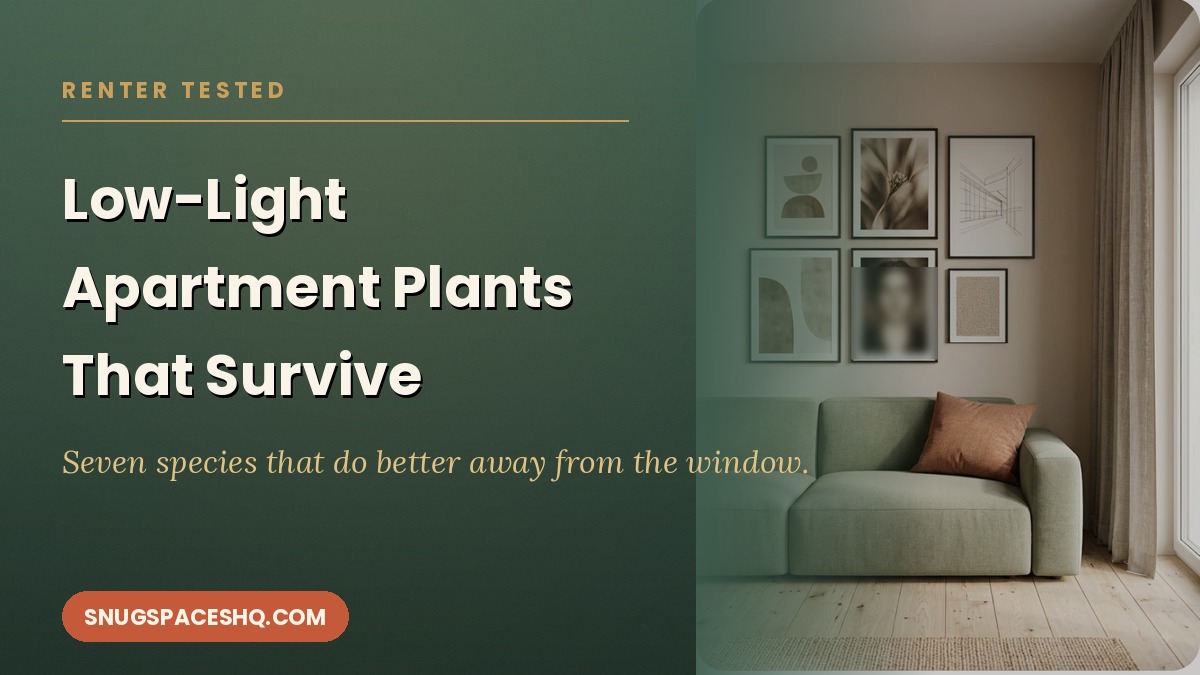
Low-Light Apartment Plants That Actually Survive: A Renter-Tested List
North-facing windows and deep apartment layouts kill most houseplants within a month. Not because renters neglect them — usually the opposite. The plant arrives, it starts to droop, the owner waters it more, and the roots rot in a corner that never gets enough light to dry the soil out.
The fix is not a grow light or a watering schedule. It is choosing species that evolved on forest floors, under a canopy, in exactly the kind of dim, indirect light your apartment actually has.
First, be honest about how much light you have
“Low light” gets used loosely. Here is a practical test that takes five seconds: at midday, hold your hand about a foot above the spot where the plant will live.
- Sharp, defined shadow — that is bright indirect light, and most plants will be fine.
- Soft, fuzzy shadow — medium light. Comfortable range for the list below.
- Barely any shadow — genuine low light. Only the top four on this list will hold up.
- No shadow at all — too dark for any living plant long term. This is where a good faux plant is the honest answer.
Also note direction. A north-facing window gives soft, consistent light all day. An east window gives gentle morning sun. A west window gives harsh afternoon heat that can scorch shade plants even though the room feels dark the rest of the day.
The seven that actually survive
1. Pothos
The most forgiving plant on this list. Pothos tolerates deep shade, irregular watering, and being forgotten for two weeks. It vines, so it works trailing from a shelf or trained along a wall with adhesive hooks — useful if you are also trying to use vertical space without drilling. Golden and jade varieties handle low light better than heavily variegated ones, which need more light to keep their pattern.
2. ZZ plant
Stores water in thick underground rhizomes, which means it genuinely prefers being underwatered. It survives fluorescent office light, hallway corners, and month-long neglect. The only reliable way to kill one is to keep the soil wet.
3. Snake plant (Sansevieria)
Upright, architectural, and nearly indestructible. Tolerates low light, dry air, and inconsistent watering. Also one of the few plants that keeps converting CO2 at night. Water it roughly once a month in winter and you will be fine.
4. Cast iron plant (Aspidistra)
Named for exactly the reason you would guess. It grows slowly, which is the tradeoff, but it handles conditions that kill everything else — deep shade, cold drafts, dry air, missed waterings. If you have a genuinely dark corner and want something living in it, this is the pick.
5. Philodendron (heartleaf)
Similar to pothos in temperament, with softer heart-shaped leaves. Vining, forgiving, and quick to tell you when it is thirsty by drooping dramatically and then recovering within hours of watering.
6. Peace lily
The one plant here that flowers in low light. It also visibly wilts when it needs water and perks back up within an hour, which makes it unusually beginner-friendly. Worth knowing: peace lilies are toxic to cats and dogs, so skip it if you have pets.
7. Chinese evergreen (Aglaonema)
Tolerates low light and adds color that most shade plants do not — silver, cream, and pink variegation depending on the cultivar. Darker green varieties handle the lowest light; the pink ones want a bit more.
The mistake that kills most of them
In low light, plants use less water. Watering on a schedule instead of by feel is what actually kills them.
A plant in a dim corner might go three weeks between waterings while the same plant on a bright sill needs water every five days. Ignore the schedule. Push a finger two inches into the soil; if it is damp, wait.
Two more things that matter more than people expect: make sure every pot has a drainage hole, and wipe the leaves with a damp cloth once a month. Dust on a leaf in a dark room meaningfully reduces the light the plant can actually use.
Renter-friendly placement
None of these need to touch your walls. Floor plants in the corner of a room, trailing plants on top of a bookshelf, or a plant stand near a window all work without a single hole. If you want a plant higher on a wall, adhesive hooks rated for the weight will hold a small trailing pot — just check what adhesive strips can actually hold before you trust one with a ceramic planter.
Keep saucers under everything. A slow leak onto a wood floor is exactly the kind of thing that turns into a deduction at move-out — you can see how much that sort of damage typically costs with our security deposit calculator.