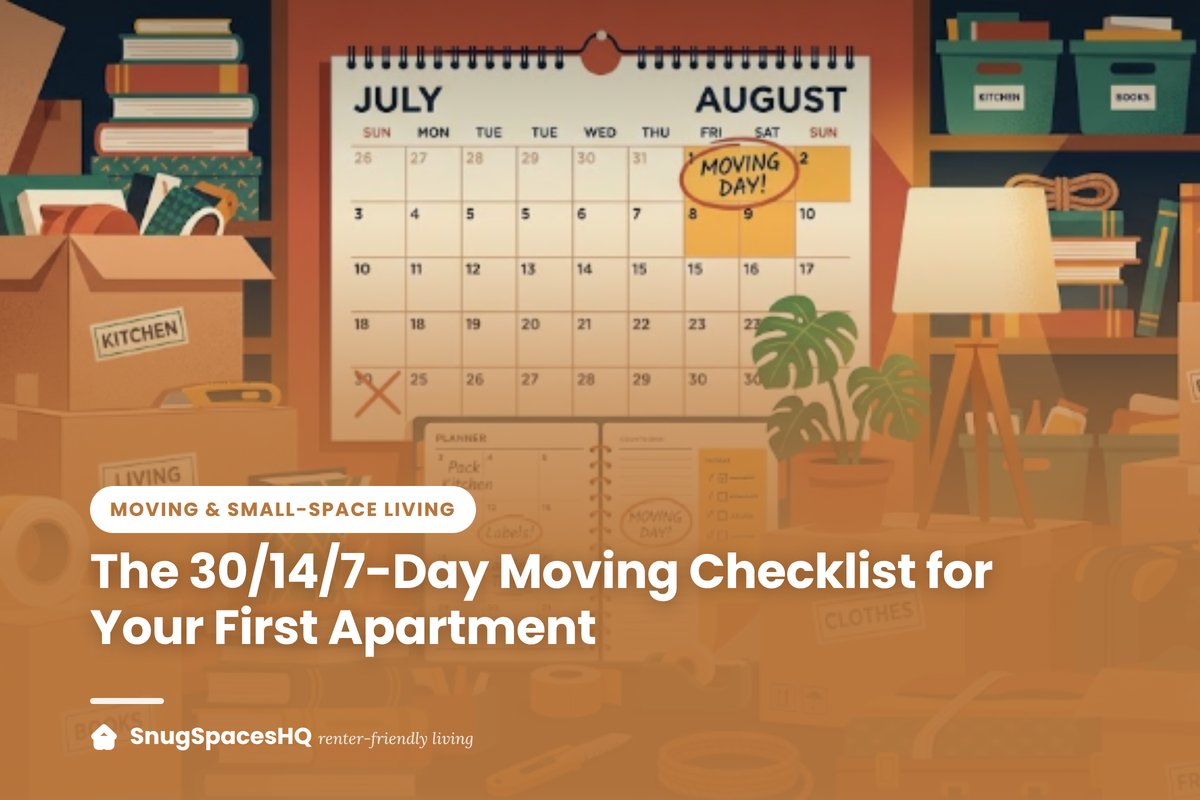
The 30/14/7-Day Moving Checklist for Your First Apartment
You signed the lease. The deposit cleared. Moving day is five weeks out and your entire plan so far is one roll of packing tape sitting on the kitchen counter and a vague sense that you’ll “figure it out.” That’s normal. Most first-time renters underestimate how many small tasks a move actually has beyond hiring a truck: forwarding the mail, remembering the lease notice deadline, the twenty little things that get missed until they become a problem at 9pm the night before.
This checklist breaks the process into four windows: 30 days out, 14 days out, 7 days out, and moving day itself, plus a first-week list for the new place. Adjust the timing if your move is faster or slower, but keep the order — budget and declutter before you pack, pack before utilities go live, utilities before the truck shows up.
30 Days Out: Budget, Notify, and Decide How You’re Moving
Thirty days feels early to start, but two things on this list have hard deadlines set by your lease, not by you.
Check your lease’s notice requirement first
Before anything else, pull out your current lease and find the notice-to-vacate clause. Most leases require 30 days’ written notice, but plenty require 60, and month-to-month agreements sometimes ask for less. If your lease requires 60 days and you’re already inside that window, send your notice today. Landlords can charge you for an extra month if the notice arrives late, even by a day or two. Send it in writing (email counts if your lease allows it, but a printed letter with a delivery confirmation is safer) and keep a copy for yourself.
Set a real budget
Moving costs more than people expect because it’s never just “the truck.” A rough 2026 breakdown for a local move:
- DIY truck rental (U-Haul 10-foot): around $19.95/day base rate plus roughly $1–$1.20 per mile, plus environmental fee, insurance, and fuel
- DIY truck rental (15 to 20-foot, for a 1-2 bedroom): $29.95–$39.95/day base plus mileage
- Full-service local movers, 2-person crew with truck: about $120–$180 per hour
- Full-service local movers, 3-person crew: about $170–$250 per hour
- Typical total for a 1-bedroom local move with movers: $500–$1,200
- Portable storage container (PODS or similar), if you need a buffer between move-out and move-in dates: a few hundred dollars per month plus delivery fees
- Packing supplies: $50–$150 depending on how much you buy versus scavenge
- Security deposit and first month’s rent at the new place, plus possibly a pet deposit or amenity fee
- Utility deposits or activation fees at the new address
Add a cushion of $100–$200 for the stuff nobody budgets for: an extra Uber trip because your car is full, pizza for whoever helped you carry the couch.
Declutter before you pack, not while you pack
Packing something you don’t want in your new place doubles the work. You pack it, carry it, unpack it, then get rid of it anyway. Go room by room and sort into keep, sell, donate, and trash. Facebook Marketplace and your local Buy Nothing group move faster than you’d think for furniture; Goodwill or a local shelter will often take gently used household goods, and some will schedule a pickup so you’re not hauling a couch to a drop-off point yourself.
Decide: truck, movers, or a hybrid
For a studio or one-bedroom with a small friend group and a free Saturday, a rental truck is usually cheaper. For anything larger, a walk-up building with stairs, or a move where you genuinely cannot take a day off work, full-service movers start to make more sense once you count your own time. A middle option a lot of first-time renters skip: hire movers just for loading and unloading and drive the truck yourself, which usually runs a flat few hundred dollars for a couple hours of labor.
14 Days Out: Utilities, Address, and Packing Supplies
Set up utilities at the new place
Call or go online to set up electric, gas, water, internet, and (if it’s not included in rent) trash service to start the day you get keys, not the day you move in furniture. You don’t want to be standing in an unlit apartment because the power company needed 48 hours to activate service. Ask your new landlord which company handles electric and gas; in a lot of cities you don’t get to choose. Line up renters insurance now too; many landlords require proof of a policy before handing over keys, and it typically runs $15–$25 a month.
File your USPS change of address
Do this online at usps.com about two weeks before your move. There’s a $1.25 identity verification fee (yes, even online), and forwarding usually kicks in within 3 business days of your request, though USPS recommends building in up to two weeks of buffer. Standard forwarding lasts 12 months, which is a decent safety net for the stray catalog or DMV renewal notice that goes to your old address.
Update your address with these separately, since USPS forwarding won’t cover all of them promptly:
- Your bank and credit card issuers
- Employer/payroll department
- DMV (most states give you 10-30 days after moving to update your license, but check your state’s window)
- Voter registration
- Subscriptions and streaming billing addresses
- Insurance providers (health, auto, renters)
- Any online shopping accounts with saved addresses, so a package doesn’t end up at your old door
Gather packing supplies
Don’t buy everything new. Grocery stores and liquor stores often give away sturdy boxes for free if you ask at the right time of day (early morning, before they break them down for recycling). What’s worth buying:
- Packing tape, at least 3-4 rolls, plus a tape gun if you’re packing more than a studio’s worth
- A permanent marker for labeling, ideally a different color per room
- Bubble wrap or packing paper for dishes and glassware
- Furniture blankets or moving pads if you’re renting a truck
- A few wardrobe boxes if you have a lot of hanging clothes — they save an enormous amount of time versus folding everything
- Zip-top bags for loose hardware (unscrew furniture legs and tape the bag of screws directly to the piece)
- A box cutter and extra utility knife blades
If you’re using movers or a truck rental company, confirm your booking now if you haven’t already. Weekends and the first and last few days of the month book up fast, especially in college towns and cities with a lot of annual lease turnover.
7 Days Out: Pack Room by Room
Work through your place methodically rather than grabbing whatever’s closest. A reasonable order:
- Storage areas and closets first — off-season clothes, holiday decorations, anything you haven’t touched in months
- Books, decor, and non-essential kitchen items next — the extra serving dishes, the blender you use twice a year
- Bedroom — pack most clothes, leave out a few days’ worth
- Bathroom — pack backup toiletries, leave daily essentials out until the last day
- Kitchen — pack it second-to-last since you still need to eat; leave a plate, bowl, cup, and basic utensils per person out
- Everyday essentials — packed last, straight into the essentials box (more on that below)
Label every box with the room it’s going to and a rough contents list — “kitchen: pots/pans” beats just “kitchen” once you’re unpacking at 8pm and can’t remember which of twelve identical boxes has the coffee maker in it. If you’re paying movers by the hour, having everything boxed, labeled, and staged near the door before they arrive saves real money.
This is also the week to confirm logistics: double-check your moving company’s arrival window, confirm your truck rental reservation and pickup location, and if you’re moving into a building with an elevator or loading dock, ask the property manager about reserving it for a specific time block. A lot of buildings require this and will fine you if you show up with a truck and no reservation.
Moving Day
Pack an essentials box (or two) that travels with you, not in the truck. This is the box you’ll want within arm’s reach the first night, before anything else is unpacked:
- Phone chargers and a power strip
- Toilet paper, hand soap, a couple of towels
- Basic toiletries and any prescription medications
- A change of clothes for the next day or two
- Bedsheets and a pillow, so you’re not sleeping on a bare mattress
- Snacks and bottled water
- Plates, cups, and utensils for one meal per person
- Trash bags and paper towels
- A basic tool kit — screwdriver, hammer, adjustable wrench
- Important documents: lease copy, ID, and any move-in paperwork
- A flashlight, in case you’re moving in after dark and haven’t found the light switches yet
Before you leave your old place, walk through every room with your phone camera and photograph the empty apartment, including inside cabinets and the fridge. Landlords sometimes try to charge for damage that was already there, and timestamped photos are your best evidence if a deposit dispute comes up. Do the same walkthrough at the new place before you unload a single box.
If you hired movers, have cash or a card ready for a tip. 15-20% of the total cost is standard for a job well done, split among the crew.
Your First Week in the New Apartment
Once the boxes are inside, spend twenty minutes doing a walk-through before you collapse on the couch. A handful of small checks now save you a bad surprise later:
- Locate the breaker box and label which switches control which rooms
- Test every smoke detector and carbon monoxide detector, and replace batteries if you’re not sure when they were last changed
- Find the main water shutoff valve, usually near the water heater or under a kitchen/bathroom sink
- Locate the gas shutoff if you have a gas stove or furnace
- Test all door and window locks; ask the landlord about rekeying if you’re not confident about who else has a copy
- Run the dishwasher, garbage disposal, and washer/dryer through a quick cycle to catch any issues early while it’s still the landlord’s problem to fix
- Check under sinks and around windows for signs of leaks, mold, or pests
- Locate your mailbox and get the key, along with any parcel locker code if your building has one
- Confirm your internet and utilities are actually active, not just scheduled
- Save your new landlord’s or property manager’s maintenance contact number somewhere you’ll actually find it
Small-space living rewards a slower unpack, honestly. Resist the urge to shove everything into place in one exhausted evening. Set up the essentials — bed, bathroom, kitchen basics — the first night, then take the rest of the week to figure out where things actually belong instead of just where they landed off the truck.
Do not leave the accounts to the last minute either — setting up utilities and internet has its own order of operations, and getting it wrong means a dark apartment on day one.